The Illusion of the Peg: Machine Learning Systems That Detect Stablecoin Failures Before the Market Does
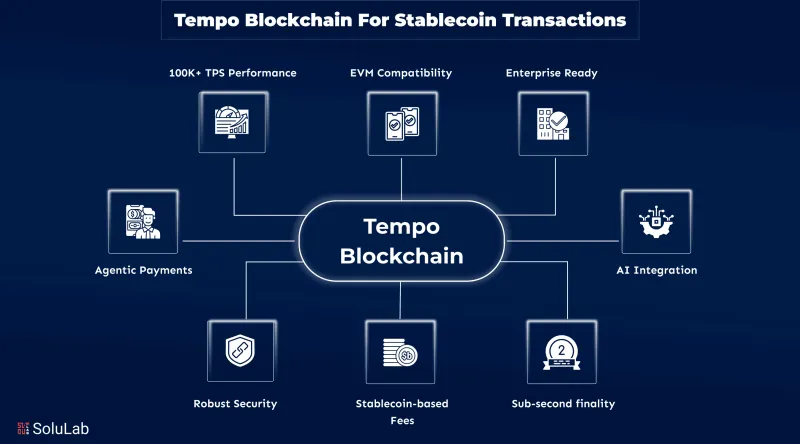
Photo: stablecoin blockchain data monitoring digital finance security, via www.solulab.com
The word "stable" carries an implicit promise. When retail investors move capital into stablecoins, they are not speculating — they are, in theory, seeking refuge. The collapse of that promise, when it comes, tends to arrive with brutal speed and almost no warning visible to the average market participant. What most traders experience as a sudden crisis is, in reality, a failure that has been quietly accumulating for days or weeks in the on-chain data that few people know how to read.
This is precisely the gap that machine learning-based monitoring systems are designed to close.
Why Stablecoins Fail: A Structural Overview
To appreciate what AI monitoring systems are looking for, it helps to understand the distinct failure modes that characterize different stablecoin architectures.
Fiat-collateralized stablecoins — those backed by dollar deposits or equivalent assets held in reserve — are theoretically the most straightforward. Their primary vulnerability is opacity: if the entity controlling the reserves misrepresents their composition or liquidity, the peg is only as stable as the honesty of a centralized custodian. The 2023 USDC depeg event, triggered by Silicon Valley Bank's collapse and the revelation that Circle held a portion of its reserves there, illustrated how quickly confidence can evaporate even in a well-regarded issuer.
Algorithmic stablecoins represent a categorically different risk profile. The 2022 collapse of TerraUSD (UST) remains the defining case study: a peg maintained through a reflexive relationship with a volatile governance token, LUNA, that entered a death spiral once redemption pressure exceeded the system's capacity to absorb it. Approximately $40 billion in combined market value was destroyed within days.
Crypto-collateralized stablecoins, such as DAI, introduce a third failure mode: collateral liquidation cascades during sharp market downturns that can temporarily stress the peg even when the underlying protocol is functioning as designed.
Each of these failure modes leaves a distinct fingerprint in on-chain and off-chain data — fingerprints that machine learning systems are increasingly adept at reading.
What the Algorithms Are Actually Watching
Effective stablecoin monitoring is not a single-signal problem. The ML systems emerging in this space are multivariate by design, aggregating data streams that individually might appear unremarkable but collectively form a coherent picture of systemic stress.
Reserve ratio and composition analysis: For fiat-backed stablecoins, AI tools ingest attestation reports, on-chain treasury wallet activity, and third-party audit data to model the relationship between circulating supply and verifiable reserves. Deviations from expected reserve trajectories — even subtle ones — can trigger early alerts.
Liquidity pool depth and skew: Decentralized exchange liquidity pools for major stablecoins provide a real-time window into market sentiment. When liquidity providers begin withdrawing capital from a stablecoin pool asymmetrically — holding onto one asset while exiting the other — machine learning models trained on historical depeg events can recognize the pattern. In the hours before UST's collapse, Curve Finance pool imbalances provided exactly this kind of early signal, though most retail participants did not know to look.
Large wallet behavior: On-chain analytics allow monitoring systems to track the movement of significant stablecoin holdings. Coordinated redemptions or transfers from institutional-scale wallets to exchanges, particularly when concentrated in a short timeframe, are a recognized precursor to depegging pressure. ML models can distinguish between routine treasury management and anomalous outflow patterns with a degree of precision that manual monitoring cannot match.
Social sentiment and governance activity: Natural language processing components monitor governance forums, developer communications, and social media for signals that precede protocol-level stress. Unusual urgency in governance proposals, emergency parameter changes, or abrupt shifts in developer communication patterns have historically preceded stablecoin crises.
Cross-market correlation analysis: Some advanced systems model the correlation between a stablecoin's underlying collateral or governance token and broader market conditions. When those correlations shift unexpectedly — as they did when LUNA began diverging from typical market behavior in May 2022 — the deviation registers as an anomaly worth investigating.
Case Studies in Early Detection
The retrospective analysis of major stablecoin failures consistently reveals that the data was available; what was lacking was the infrastructure to interpret it in time.
In the UST collapse, on-chain observers with access to Curve pool monitoring noted the pool's imbalance — UST's share growing disproportionately as sophisticated participants quietly exited — approximately 72 hours before the depeg became headline news. An ML system trained to weight this signal appropriately could have generated a meaningful alert well within that window.
The USDC depegging event of March 2023 offers a different lesson. The stablecoin briefly traded at approximately $0.87 before recovering once Circle confirmed the extent of its SVB exposure and the Federal Deposit Insurance Corporation intervened. Systems monitoring reserve concentration and banking counterparty risk — specifically, the proportion of reserves held at institutions with elevated risk profiles — were better positioned to flag the vulnerability than those focused exclusively on on-chain metrics.
Emerging AI Solutions in This Space
The market for dedicated stablecoin monitoring infrastructure is still developing, but several meaningful approaches are gaining traction among institutional DeFi participants and sophisticated retail traders.
Some platforms offer portfolio-level integration, alerting traders when stablecoins they hold or use as collateral in DeFi positions exhibit elevated risk scores based on composite ML models. Others function as standalone monitoring dashboards, providing real-time risk ratings for the major stablecoins alongside the specific data signals driving each assessment.
For traders who actively deploy capital across DeFi protocols — using stablecoins as collateral for leveraged positions or as the base asset in yield strategies — the practical application is clear. An early warning that a stablecoin's peg integrity is deteriorating allows for orderly reallocation rather than panic exits into an already-stressed market.
The Limits of Prediction
A measured assessment requires acknowledging what these systems cannot do. Machine learning models are trained on historical data, and the crypto market has a persistent tendency to generate novel failure modes. A sufficiently novel attack vector or an entirely new stablecoin architecture may not map cleanly onto existing training sets.
Additionally, the act of widely disseminating risk signals creates its own dynamics. If a large population of traders receives the same depeg alert simultaneously and acts on it, the alert itself can accelerate the very event it predicted — a reflexivity problem that is inherent to any widely-adopted early warning system.
These limitations do not diminish the value of AI monitoring; they simply define its appropriate role. Used as one input among several in a disciplined risk management framework, machine learning-based stablecoin surveillance represents a meaningful advancement over the alternative: discovering a collapse in your portfolio balance the morning after it happened.