The Whale Watching Problem: Why AI On-Chain Tracking Tools Deliver Less Certainty Than Advertised

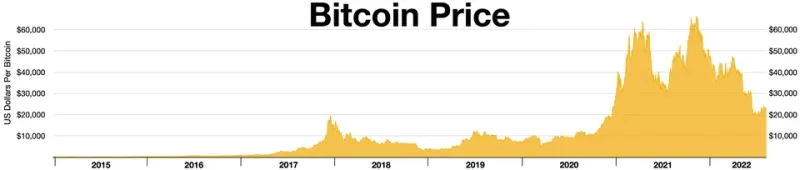
Photo: JDA Dijon, Public domain, via Wikimedia Commons
The pitch is seductive: artificial intelligence monitors the blockchain in real time, flags when a wallet holding tens of thousands of Bitcoin begins to move funds, and alerts you before the market reacts. Front-run the whales. Trade like an insider — legally. For retail investors who have long felt outgunned by institutional participants and sophisticated algorithmic traders, the appeal is obvious.
But a closer examination of how these tools actually function — and, more importantly, how often they are wrong — reveals a more complicated picture. AI-powered whale tracking is a legitimate and sometimes useful component of on-chain analysis. It is not, however, the reliable edge that many platforms imply it to be.
How On-Chain AI Analysis Actually Works
Public blockchains like Bitcoin and Ethereum record every transaction in a permanent, auditable ledger. This transparency is foundational to the technology's design. It also means that anyone with the right tools can observe wallet activity at scale — including the movements of addresses known to hold extremely large positions.
AI systems applied to this data typically function through a combination of wallet clustering (grouping addresses believed to belong to the same entity), behavioral pattern matching (identifying transaction signatures consistent with accumulation, distribution, or exchange deposits), and anomaly detection (flagging activity that deviates significantly from a wallet's historical norms).
When a wallet historically associated with a major mining operation or early Bitcoin accumulator suddenly transfers a large sum to an address linked to a centralized exchange, AI systems can flag that movement within seconds. The implied interpretation: a large holder may be preparing to sell.
The logic is coherent. The execution is where things get complicated.
The False Signal Problem
Cryptocurrency wallets are not simple bank accounts. Large holders — institutional custodians, corporate treasuries, long-term individual investors — routinely move funds between cold storage, hot wallets, custodial platforms, and internal operational addresses for reasons entirely unrelated to trading intent. A transfer from a cold wallet to an exchange address might indicate an imminent sale. It might equally indicate a security upgrade, a custody migration, a collateralization event for a DeFi loan, or a routine operational transfer between affiliated entities.
AI systems struggle to distinguish between these scenarios with the reliability that marketing materials typically imply. A 2023 analysis of several prominent whale alert platforms found that a substantial proportion of flagged "exchange inflow" events from large wallets were attributable to internal transfers rather than liquidation activity. Retail traders who acted on those signals — shorting the market or liquidating positions in anticipation of downward pressure — frequently found themselves on the wrong side of moves that never materialized.
This is not a failure of the underlying technology so much as a fundamental limitation of observable data. The blockchain shows what moved and where it went. It does not show why.
When the Model Gets Too Clever
A second category of problem emerges from AI systems that attempt to build predictive models on top of raw on-chain observation. Rather than simply alerting users to large transfers, these tools attempt to assign probability scores to different outcomes — estimating, for instance, the likelihood that a flagged transfer will be followed by a significant price move within a defined timeframe.
The challenge is that these models are trained on historical data from a market that is continuously evolving. Behavioral patterns that were predictive in 2020 or 2021 may carry little signal value in the current environment, where institutional custody infrastructure has matured, OTC desk activity has grown substantially, and sophisticated holders have become increasingly aware that their on-chain behavior is being monitored.
That last point deserves particular emphasis. The most sophisticated large holders actively manage their on-chain footprint. Transactions are structured to obscure intent. Transfers are staged across multiple addresses. The very act of widespread AI monitoring creates incentives for the entities being monitored to adapt — a dynamic that progressively degrades the signal quality of the tools themselves.
The Ethical Dimension
The legal standing of on-chain analysis is clear: public blockchain data is publicly observable, and there is no reasonable expectation of privacy attached to a Bitcoin address by virtue of its design. But the ethical questions are more nuanced, and they are beginning to attract serious attention in US policy circles.
When AI tools are used to identify, track, and trade against the inferred intentions of specific large holders — including, potentially, individuals rather than institutions — questions arise about the appropriate boundaries of algorithmic surveillance. The crypto community has historically celebrated the pseudonymous nature of blockchain activity. The proliferation of sophisticated de-anonymization tools challenges that foundational premise.
For retail investors, the ethical concern is somewhat more practical: if the tools being used to track whale activity are also being used by the whales themselves to identify when their movements are being monitored, the information asymmetry may actually favor the larger players — precisely the opposite of the intended outcome.
Practical Guidance for US-Based Investors
None of this is an argument for ignoring on-chain data entirely. Aggregate metrics — total exchange inflows and outflows, long-term holder supply dynamics, miner reserve levels — provide genuinely useful context for assessing market structure. The error lies in treating individual wallet movement alerts as actionable trading signals.
Several principles are worth applying when evaluating any platform that offers AI-driven whale tracking:
Demand transparency on accuracy rates. Any tool making predictive claims should be able to provide historical accuracy data across a meaningful sample size and time horizon. Vague references to "sophisticated AI" without supporting performance metrics are a significant red flag.
Treat signals as context, not directives. A flagged whale transfer is a data point, not a trade. It should inform broader analysis, not replace it.
Understand what the signal actually measures. Exchange inflow alerts and "sell signal" classifications are not the same thing. The distance between observable on-chain behavior and inferred market intent is where most retail losses in this space originate.
Consider the time decay of on-chain signals. By the time a whale movement is detected, processed by an AI system, distributed to platform users, and acted upon, the informational edge — if one ever existed — may have already been arbitraged away by faster participants.
The Broader Lesson for Portfolio Construction
The rise of AI whale tracking tools reflects a genuine and understandable desire among retail investors to reduce the information asymmetry that characterizes cryptocurrency markets. That aspiration is legitimate. The execution, in many cases, falls considerably short of the promise.
A more durable approach treats on-chain analysis as one layer of a multi-factor strategy — valuable for understanding aggregate market conditions, but insufficient as a standalone basis for trading decisions. The most robust portfolios are built on a foundation of clear investment objectives, disciplined risk management, and a sober assessment of what any given tool can and cannot reliably deliver.
When AI gets too clever at predicting whale movements, the first casualty is usually the retail investor who trusted the output without questioning the methodology.